

How to Choose the Right Textile Export Partner for Your Business

Finding the right textile export partner is like choosing the foundation of your business. If your partner is reliable, your supply chain runs smoothly, your customers stay happy, and your profits grow. But if you pick the wrong one, delays, poor quality, and hidden costs can damage your reputation.
Hey friends, I’m Sikandar. I’ve been connected with the textile world for a long time, and I’ve seen many businesses succeed and some fail just because of one key decision: choosing the right export partner.
In this blog, I’ll share practical tips, real lessons I’ve seen in the market, and simple ways you can judge whether an export partner is truly right for your business or not?
Why Your Textile Export Partner Matters
Think of your export partner as the bridge between your factory and your customer. If the bridge is strong, everything crosses smoothly. If the bridge is weak, sooner or later it will collapse.
For example:
- A good partner will deliver on time, use the right packaging, and keep quality consistent.
- A bad partner may delay shipments, cut corners on quality, or surprise you with hidden costs.
This one decision can affect your entire business from customer trust to your financial growth. If you’re still exploring how Pakistani exporters built such strong reputations, you might like to read Why Pakistani Textiles Dominate the Global Market.
Key Factors to Look for in a Textile Export Partner
Here’s how to break it down in simple points that any business owner can understand.

1. Reliability & Consistency
Don’t just look at fancy websites or big promises. Ask:
- Do they deliver on time, every time?
- Can they handle big orders without delay?
- Do they keep quality the same in every shipment?
A partner who is consistent will save you a lot of stress in the long run.
2. Quality Standards
Quality is not just about the fabric it’s about the stitching, the finish, the durability, and even the packaging.
- Check if they follow international standards.
- Ask for samples and compare them.
- See if they allow third-party quality checks.
Because one poor-quality shipment can ruin customer trust built over years. You can also go through our detailed guide on Common Challenges in Textile Exports to understand how quality lapses often happen and how to avoid them.
3. Transparency in Communication
A trustworthy export partner will always be clear with you. They won’t hide costs or make excuses when things go wrong.
- Do they give clear invoices without hidden charges?
- Do they keep you updated on production and shipping?
- Are they open about challenges, instead of hiding them?
If they communicate well, half your problems will never even arise.
4. Compliance & Certifications
Textiles are highly regulated. Many countries need certifications for quality, safety, and sustainability.
- Make sure your partner is legally compliant.
- Check if they have sustainability certificates (if that matters to your customers).
- This not only avoids legal troubles but also improves your brand reputation.
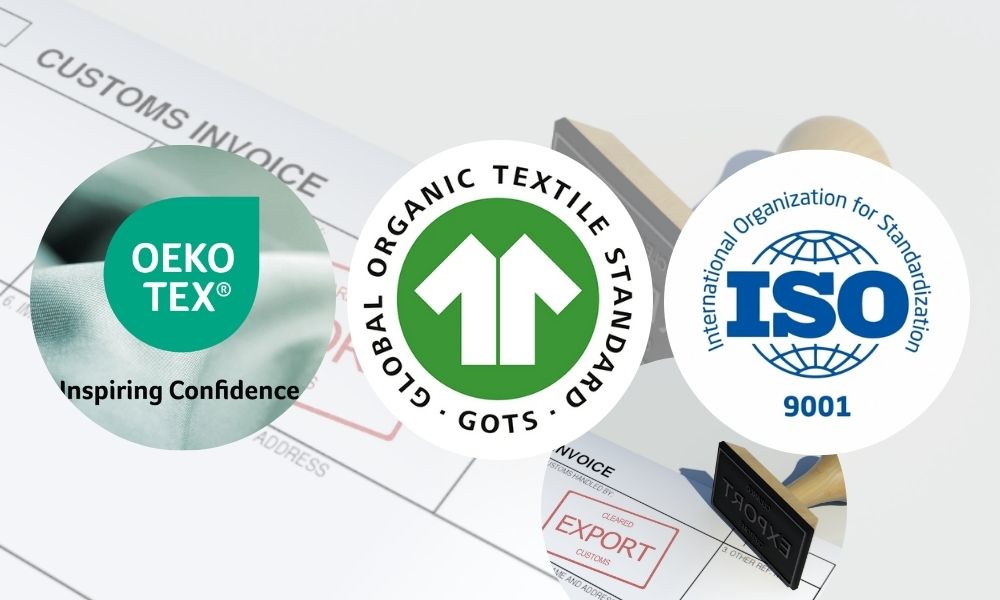
If you’re not sure which certifications matter the most, check our detailed guide on The Role of OEKO-TEX & ISO Certifications in Global Textile Trade
5. Financial Stability
An unstable partner may suddenly fail to deliver. This is risky.
- See how long they’ve been in business.
- Ask for basic financial documents if needed.
- A financially strong partner can handle ups and downs in the market.
Red Flags You Should Never Ignore
Sometimes, problems show up early but we ignore them. Here are some warning signs:
- Always late in replies → means they might also delay your shipments.
- Changing quality in every batch → means they don’t have proper systems in place.
- Prices too good to be true → often leads to hidden charges or poor quality.
- No proper documentation → can lead to customs issues and financial losses.

If you notice any of these, think twice before working with them.
A Simple Checklist for You
Here’s a simple table you can use before finalizing a textile export partner:
| Factor | Questions to Ask | What to Look For |
| Reliability | Do they deliver on time? | A record of consistent deliveries |
| Quality | Can I see samples? | High-quality finishing & fabric |
| Communication | How fast do they reply? | Honest & clear answers |
| Compliance | Do they have certifications? | Valid documents & approvals |
| Pricing | Are there hidden costs? | Transparent cost breakdown |
| Stability | How long in the market? | A trusted and financially secure company |
A Case Study
One business owner I met ordered bulk fabric from a partner offering very cheap rates. The first batch was fine, but the second batch had poor stitching and weak finishing. When customers complained, he tried reaching out to the supplier but they didn’t respond properly. Eventually, the business lost both money and reputation.
On the other hand, I’ve also seen businesses pay slightly higher prices to a reliable exporter. Yes, the cost was higher, but deliveries were on time, quality never dropped, and the business grew steadily without major issues.
So the lesson is clear: cheap isn’t always better reliability is priceless. If you’re planning cost negotiations, our blog on Export Pricing Models and Smart Negotiation Tips will help.
FAQs
Q1. How do I test if a textile exporter is reliable?
Ask for references from their past clients, order a small batch first, and see how they handle it.
Q2. Is price the most important factor?
Not at all. A low price with poor quality will cost you much more in the long run. Focus on value, not just price.
Q3. Should I always visit the factory before deciding?
If possible, yes. A visit tells you a lot about their production, systems, and honesty. But if you can’t, arrange for third-party inspection.
Q4. What if my exporter suddenly increases prices?
Negotiate, but also keep backup options ready. Never depend on just one partner.
Q5. How can I build a long-term relationship with my export partner?
Treat them like a partner, not just a supplier. Pay on time, give them regular feedback, and build trust over time.
At the end of the day, your textile export partner is not just a supplier they are a part of your business journey. A reliable partner helps you grow, while a bad one can pull you down.
So take your time, do your research, ask the right questions, and trust your gut feeling too. Because in textiles, as in life, the right partnership makes all the difference.
