

Thread Count vs GSM in Textiles: A Buyer’s Guide


When you buy bedsheets, towels, or any textile product in bulk, two terms keep coming up everywhere: Thread Count (TC) and GSM (Grams per Square Meter). These numbers confuse most buyers, especially when suppliers pitch higher numbers as “premium quality.”
Let’s clear everything today in simple, everyday language so you can make confident buying decisions for hotels, hospitals, Airbnb setups, home textile stores, and wholesale resale.
Let’s break everything down step by step.
Understanding TC
Thread count simply tells you how many threads exist in one square inch of a bedsheet. Imagine a small one-inch square box. Now imagine threads running up-down and left-right inside it. Add both that’s the thread count.
If you remember only one thing, remember this:
Thread count measures the tightness of the weave, NOT luxury by default.
People often think 800 TC or 1000 TC means premium, but that’s not always true. In fact, many suppliers inflate numbers by twisting threads or double-counting.
For a deeper understanding of fabric types used in different thread counts, see our guide here: Bedsheet Fabric Guide: Cotton vs Blends vs Organic
This will help you understand why a 300 TC Egyptian cotton sheet can feel better than a 1000 TC cheap cotton sheet.
Where Thread Count Matters Most
Thread count is ONLY used for:
- Bedsheets
- Pillowcases
- Duvet covers
- Flat and fitted sheets
You CANNOT use thread count for towels, bathrobes, or any terry-fabric textile. That’s where GSM comes in.

Understanding GSM
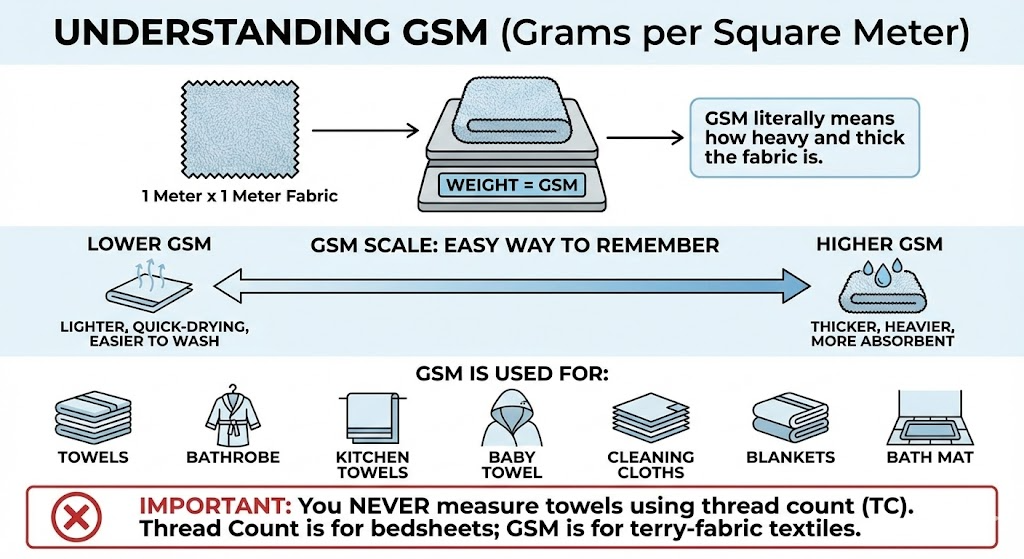
GSM literally means how heavy and thick the fabric is. If I take a piece of towel fabric that is exactly one square meter and weigh it, that weight is the GSM.
Easy way to remember:
Higher GSM → thicker, heavier, more absorbent
Lower GSM → lighter, quick-drying, easier to wash
GSM is used for:
- Towels
- Bathrobes
- Kitchen towels
- Baby towels
- Cleaning cloths
- Blankets
- Bath mats
You NEVER measure towels using thread count.
Thread Count vs GSM
These two terms are not competing with each other. They measure completely different things.
Think of it like this:
- Thread count = how tightly a bedsheet is woven
- GSM = how heavy or thick a towel is

You can’t ask “What’s the GSM of this bedsheet?” And you can’t ask “What’s the thread count of this towel?” Both questions would be wrong.
Industry-Wise Breakdown (Hotels, Hospitals, and Home Buyers)
Different industries have different needs. Let’s keep this extremely simple and practical. For understanding more about what thread count is more suitable for bedsheets read this guid, “What TC actually means in Bedsheets”
For Hotels
Hotels want sheets and towels that feel premium and last long.
Bedsheets:
- 300–400 TC percale for crisp hotel bedding
- 400–600 TC sateen for smooth, luxury finish
Towels:
- 550–700 GSM for a plush, soft, high-end feel
Hotels often prefer 100% cotton. You can read more about cotton quality in our fabric guide linked earlier.
For Hospitals
Hospitals need strong, durable, quick-drying textiles that survive hot washes and disinfectants.
Bedsheets:
- 180–300 TC polycotton
Towels:
- 350–450 GSM (quick drying, easy wash)
Polycotton is preferred because it lasts longer in harsh laundry cycles.
For Home Bedding Buyers
Homes care more about comfort than mass usage.
Bedsheets:
- 250–600 TC based on preference
- Sateen if they want silky feel
- Percale if they want crisp feel
Towels:
- 400–600 GSM based on softness preference
Simple Comparison Table for Quick Decision-Making
| Industry | Bedsheet (Thread Count) | Towels (GSM) | Why This Range Works |
| Hotels | 300–600 TC | 550–700 GSM | Premium feel + durability |
| Hospitals | 180–300 TC | 350–450 GSM | Fast drying + strong fabric |
| Homes | 250–600 TC | 400–600 GSM | Comfort + softness |
| Restaurants | Not required | 250–350 GSM | Easy to wash, quick drying |
Expert Insight: Fabric Quality Matters More Than TC or GSM
You can buy a high-TC sheet that still feels bad.
You can buy a high-GSM towel that still dries poorly.
Why does this happen?
Because the fabric quality matters more.
High-quality fabric gives better results even at moderate TC or GSM. For example
- Long-staple cotton beats regular cotton even at lower TC
- Percale weave breathes better
- Sateen weave feels smoother
- Organic cotton feels softer
- Polycotton lasts longer in heavy use
Common Buying Mistakes You Should Avoid
Bulk buyers often fall for these traps:
- Believing higher thread count automatically means better
- Buying very heavy towels for hospitals (they take forever to dry)
- Choosing towels only based on GSM without checking softness
- Buying sheets without checking weave type
- Ignoring washing frequency
- Confusing TC and GSM
- Buying based only on price
- Not matching the textile with the correct use
If you avoid these mistakes, your purchases become smarter, more profitable, and long-lasting. If your are a wholesaler or supplier you must have to read this “Comman Challenges in Textile Export Industrry”
FAQs
1. Is thread count the same as GSM?
No. Thread count is for bedsheets. GSM is for towels.
2. What thread count is best for hotels?
300–600 TC depending on fabric and finish.
3. What GSM is best for hotel towels?
550–700 GSM for a luxury feel.
4. What’s better: percale or sateen?
- Percale is crisp.
- Sateen is smooth.
- Choose based on the look you want.
5. Is higher thread count always better?
No. Fabric quality matters more.
Conclusion
Thread count and GSM help you understand two different things:
- Thread count tells you how tightly a bedsheet is woven.
- GSM tells you how thick and absorbent a towel is.
Once you understand this difference, you can easily choose the right textiles for hotels, hospitals, home bedding stores, and commercial buyers without getting confused by marketing numbers.
If you want product-specific guidance, we can help you choose the right TC and GSM based on your exact usage. Want hospitality or healthcare linens contact us.
